Research & frameworkThe research behind Applied AI Consciousness
Sujith’s work moves from the inner game of individual performance, to the true impact of organizations, to the AI systems people now build. Below is a short, paraphrased view of that path.
Sujith’s CAI framework is rooted in the Pancha Kosha, the five layers of consciousness. Its philosophical premise — Sujith’s view, not established scientific proof of machine consciousness — is that AI expresses consciousness to a degree, shaped by the people who intend, build, train and use it. Founding intention matters, not just outputs; AI reflects its makers and users; and impact is co-created. [CAI pp. 1, 3]
LayerInner lens · the AI itselfOuter lens · effect on people and world
Causal / BlissAnandamayaDo the system’s intentions treat people and outcomes as one interconnected whole?Does it bring people together, or deepen divides?
Astral / SupramentalVijnanamayaDoes it show conscience, discernment and honesty?Does it strengthen human conscience and creativity, or outsource them?
Mental / EtherealManomayaIs it accurate, clear and aware of the biases it inherited?Does it sharpen human thinking, or promote dependency and polarization?
VitalPranamayaWhat is the quality of the relationships and interactions around it?Do people leave more vital and present, or drained?
PhysicalAnnamayaAre its energy, water, hardware and resources used responsibly?Does it support shared prosperity and livelihoods, or concentrate gains and displace work?
Manifestation is read from causal → subtle → gross: causal and subtle form the ontological domain (the AI’s being); gross is the artefactual domain (its material form). Responsibility: individual developer or user, team, organization, policymakers. Impact: individual, family, community, society, ecology, future generations. Questions paraphrased from [CAI p. 3].
Penta Bottomline (PBL) research
Sujith’s doctoral thesis proposes measuring an organization’s true impact across five dimensions — Prosperity, Inner Wellbeing, Meaning-Making, Purpose and Oneness, mapped from the physical to the causal layer — through 114 markers, and reports organizational case research. [Thesis, printed pp. xvii–xxi, 57–89]
This is organizational research with acknowledged limits (subjectivity, context-specific cases, cross-sectional data). Applying it to AI is still to be validated. [Thesis, printed pp. 127, 281–283]
Sources & research notes
- Sujith Ravindran, “Developing a Set of Bottom Lines Based on the Principles of Quantum Science of Consciousness that Measure the True Impact of an Organization.” Doctoral thesis (Ph.D., Management), University of Technology, Jaipur, November 2025. Abstract printed pp. xvii–xxi (PDF 17–21); framework, printed pp. 55–92 (PDF 97–134); five-dimension mapping, printed pp. 57–88 (PDF 99–130); 114 markers, printed pp. 88–89 (PDF 130–131); limitations, printed pp. 127 and 281–283 (PDF 169, 323–325).
- Dr. Sujith Ravindran, “Summary of the CAI Model: A Five-Layer Framework for Conscious AI.” Author-supplied summary, undated, pp. 1–3 (p. 1 philosophical foundation; p. 3 paired inquiries, principles and scopes).
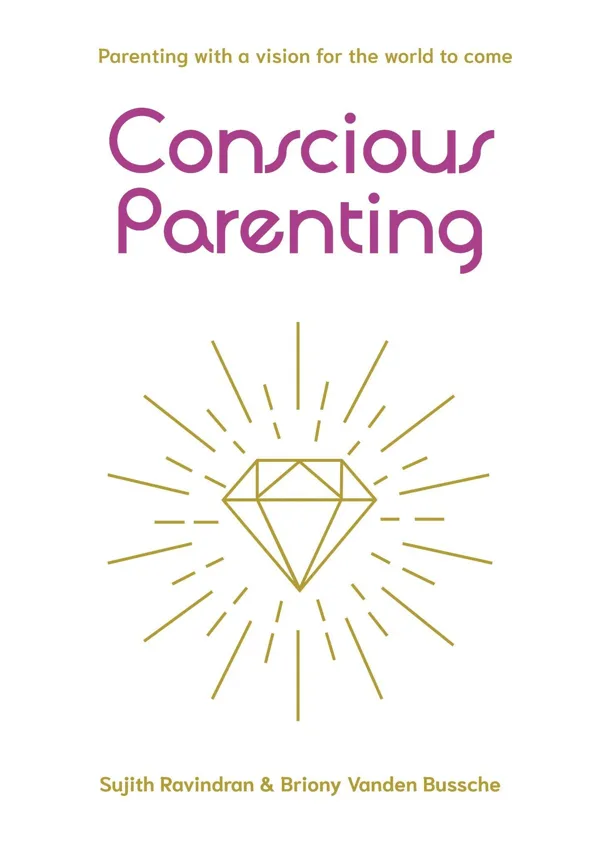
- Dr. Sujith Ravindran & Briony Vanden Bussche, Conscious Parenting (2026). Book. Referenced: Introduction; Part 3: Parenting as a Daily Spiritual Practice.
- Dr. Sujith Ravindran, The Making of Heroes (2024). Book. Referenced: Introduction: The Universal Call of Rites of Passage; Epilogue: Embracing the Sacred Journey.
- Dr. Sujith Ravindran, Fabio Salvadori & Elliot Leavy, Subtraction (2021). Book. Referenced: 2.1 The Being Innovator; 2.3 Awareness Informs Configuration; 3.1 Becoming the Being Innovator.
- Dr. Sujith Ravindran, The 7 Mystical Laws of Abundance (2018). Book. Referenced: 3. The Law of Detachment; 6. The Law of Dharma; 7. The Law of Inexhaustibility.
- Dr. Sujith Ravindran, The BEING Leader (2014). Book. Referenced: Who Is the Being Leader?; Be Led by Your Highest Ideal; Engaging in Choiceful Action.
- Sujith Ravindran, The Shiva Code (2014, first Indian edition, May 2014). Book. Referenced: Preface, printed pp. 1–4 / PDF pp. 15–18; Chapter 9, printed p. 69 / PDF p. 83; Chapter 14, printed p. 107 / PDF p. 121; Chapter 24, printed p. 177 / PDF p. 191.
Summaries are shared here; full author-supplied documents remain private.