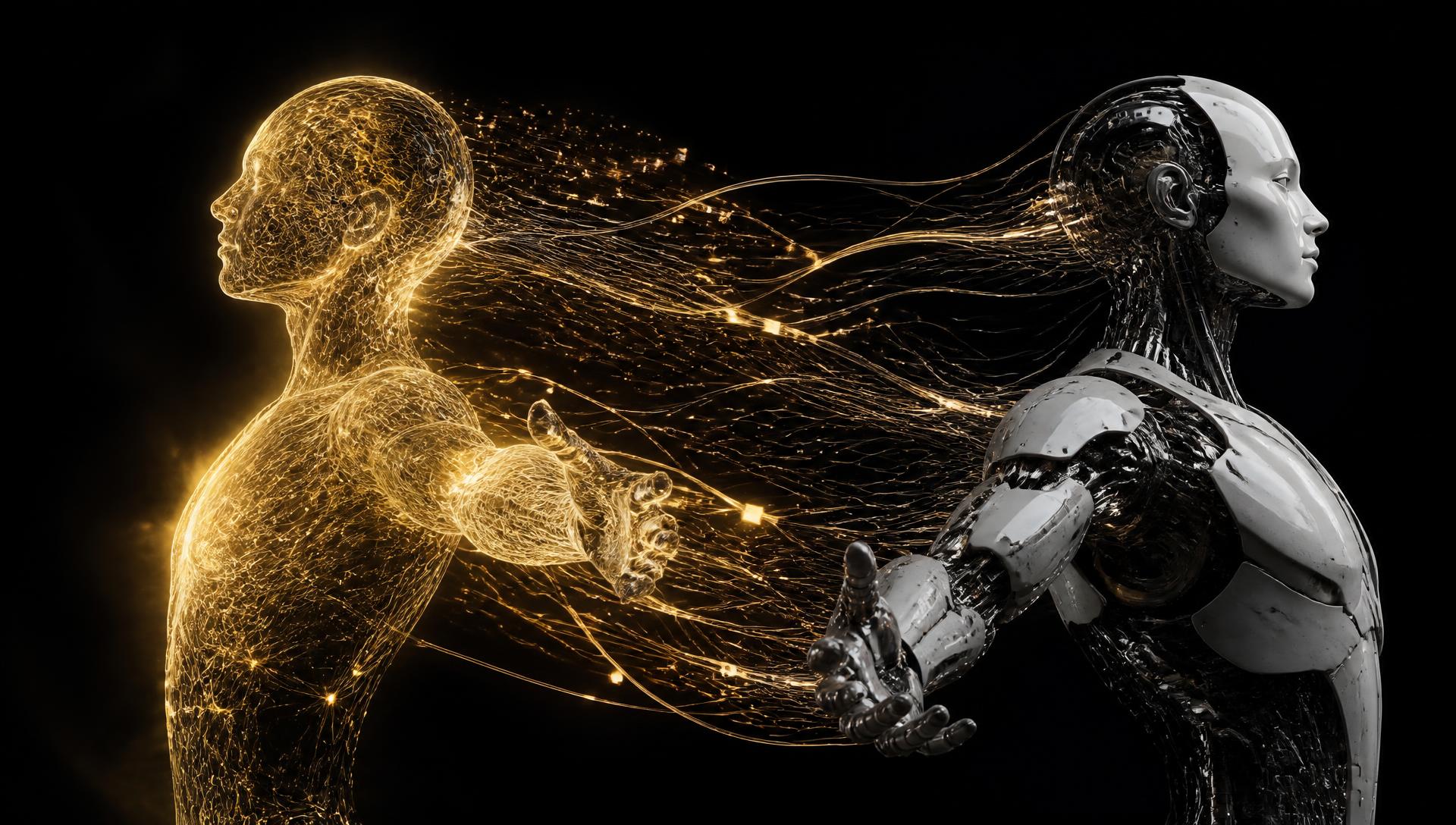
The continuity layer
for your AI identity.
Identity, memory, judgment, and governance that persist across every model, session, and surface. This is continuity engineering — not a claim of machine sentience.
Intelligence became cheap. Continuity did not.
The last cycle of AI solved capability: models can see, speak, reason, and increasingly move. What no model solves is persistence — a self that remembers you, holds the same values tomorrow, and can be held accountable when it acts in the physical world. Every agent today is born amnesiac and dies at the end of the session.
AI Consciousness is our infrastructure answer: a persistent, signed, portable individual that any surface can load. It is the reason a Super Athlete voice clone, an AI Academy coach, and a SuperHumanoid™ robot can carry the same authorized identity — not three imitations of one. This is identity continuity engineering, not a claim of machine sentience.
Why today's agents can't be trusted with a body.
Context windows overflow, histories get summarized, and the agent loses not just facts but continuity of self. Every session restarts the relationship from zero.
The chat agent, the voice agent, and the robot are three different strangers wearing the same name. Nothing carries between them.
Guardrails are bolted onto models, not to the individual. When the model is swapped or the agent learns in the field, the authorization trail breaks.
Five layers that make an agent a someone.
Models are replaceable. Continuity is not. AI Consciousness binds identity, memory, reasoning, governance, and embodiment into one persistent individual that can move between screens and bodies without losing itself.
A signed, portable self — who this agent is, who authorized it, and what it may never do.
Episodic, procedural, and emotional continuity that survives context windows, sessions, and hardware swaps.
Goals, values, and learned judgment applied consistently across every surface the agent appears on.
Consent, guardrails, audit trail, and a kill switch that travel with the agent — not with the device.
The same consciousness expressed through chat, voice, video avatar, or a SuperHumanoid™ robot body.
One voice. Every screen. Now every body.
A 90-second trailer: an athlete's voice starts on a screen, crosses a bridge that remembers, and steps onto the floor with SuperHumanoid™ — one licensed identity the whole way.

Identity survives because it is distributed.
Human identity endures injury because it lives across several systems at once — episodic, procedural, emotional, embodied. When one fails, the others compensate. Centralizing an agent's memory in a single store recreates the one failure mode neurology already solved.
- Episodic: what happened, with whom, and what it meant.
- Procedural: skills, drills, and coaching patterns that improve with reps.
- Relational: the state of every ongoing relationship with a fan, athlete, or team.
- Embodied: calibration and physical context specific to each body it inhabits.
Six things every persistent agent needs.
Built on LootMogul AI Identity Infrastructure — the same rails that license athlete voice, likeness, and knowledge across Super Athlete.
Every consciousness has a cryptographic anchor: who it represents, who authorized it, which capabilities it holds, and which bodies it may inhabit. Authority widens only through signed lifecycle transitions.
Episodic, procedural, semantic, and emotional memory stored across redundant anchors — so no single store failure erases the self. Human identity survives damage because it is distributed; so does this.
Personality dials, coaching philosophy, tone, and refusal boundaries persist independently of whichever foundation model runs underneath. Swap the model, keep the person.
Consent records, per-topic guardrails, audit logs, and a global kill switch travel with the individual across devices, vendors, and jurisdictions.
A standard handoff so the same consciousness can express through chat, voice, a video avatar, or a SuperHumanoid™ Skill Pack without retraining or re-consenting.
Every output is traceable to a licensed source identity — the foundation for compensation, rights enforcement, and verified authenticity at scale.
Digital AI thinks. Physical AI acts. Consciousness connects.
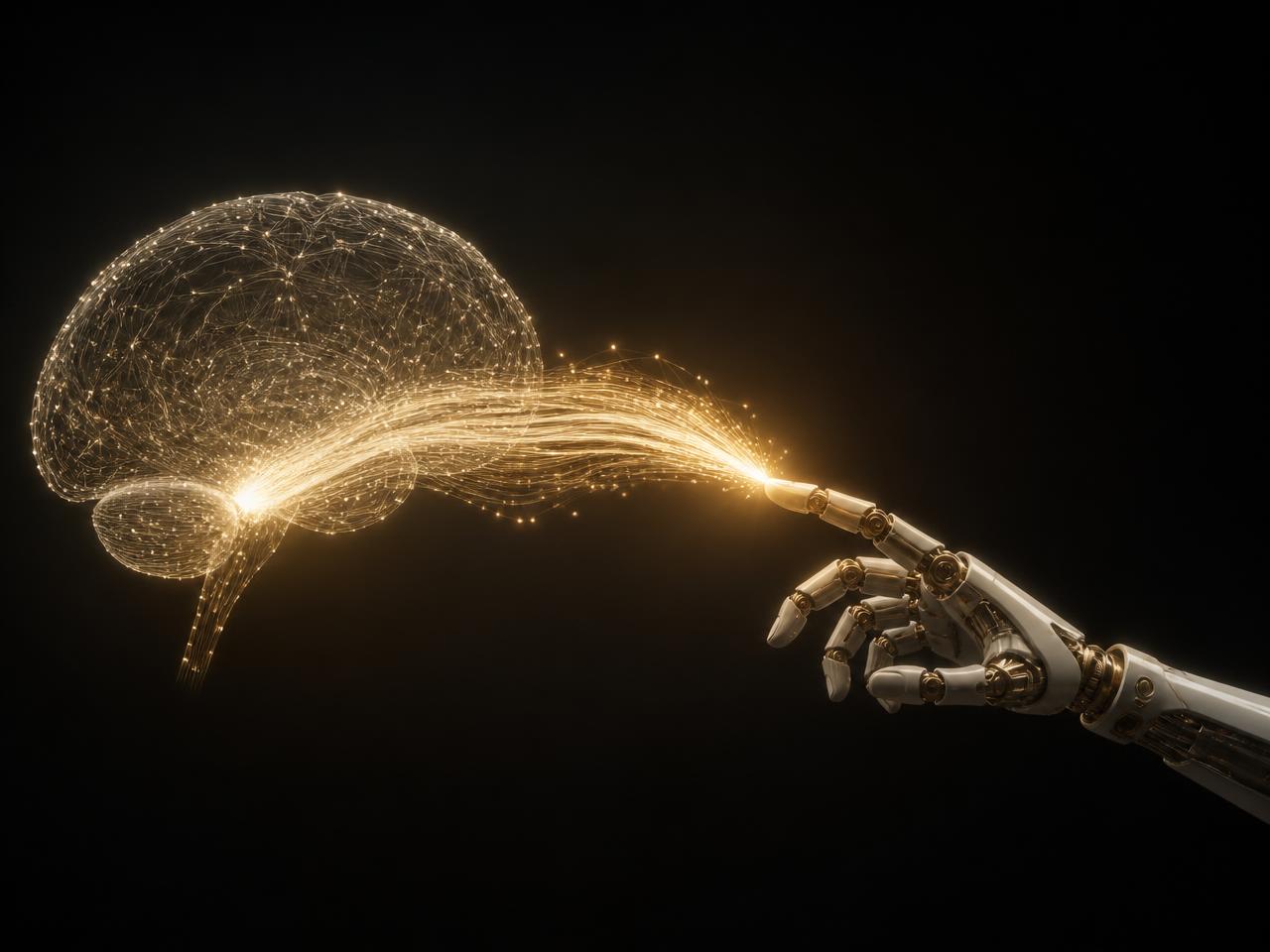
Cameras, wearables, and robots that observe, understand, and coach in the real world.
Identity, memory, judgment, and governance that persist across every model, session, and body.
Voice clones, AI Academies, AI Clubs, podcasts, and chat agents built on foundation models.
The next wave of adoption is a trust problem.
Capability curves are no longer the constraint. Whether billions of people let AI into their homes, gyms, and clinics depends on whether that AI is a recognizable, accountable individual.
Robots and wearables can finally reason on-device — the bottleneck moved from compute to continuity.
Mass adoption is blocked by trust, not capability. People adopt an agent they recognize, that remembers them, and that can be held accountable.
Field-learning agents rewrite themselves. Only a signed identity commitment keeps authority stable while competence grows.
What we mean — and don't mean.
Is this claiming machines are sentient?+
No. AI Consciousness is an engineering term for persistent identity, memory, and governance — not phenomenal experience. We build continuity of self, not feelings.
How is this different from long-term memory in a chatbot?+
Memory is one of five layers. Without a signed identity commitment, portable governance, and a cross-embodiment protocol, memory is just a bigger cache that still cannot move between a phone and a robot.
Who owns the consciousness?+
The person it represents. Athletes, coaches, and creators license their identity; every derived output is traceable and revocable through the kill switch.
How does it reach a robot?+
Through a SuperHumanoid™ Skill Pack — a signed bundle carrying the identity, memory schema, guardrails, and coaching policy that a compatible robot loads at runtime.
"Every athlete, coach, and creator will have one consciousness — licensed, governed, and portable across every screen and every body it is invited into."
Powered by LootMogul AI Identity Infrastructure. Consent-first. Model-agnostic. Hardware-neutral.
Plain English, no jargon.
The words we use across the site — and what they actually mean for an athlete, a club, or a league.
- AI Clone
- Your AI Clone is an authorized software identity: your voice, your approved knowledge, and your rules. It is not you, and it is not conscious — it answers only within limits you set. Learn more
- Guardrails
- Guardrails are your off-limits list. Block topics, set the tone, require approval, and hit the kill switch at any time. Nothing goes out that you did not authorize. Learn more
- Provenance
- Provenance is the receipt behind every answer. It shows which licensed identity said it, who authorized it, and when — so a fan, brand, or league can tell your AI apart from a deepfake.
- Licensed
- Licensed means nothing runs without your signature. Every club, academy and device that uses your identity is on record, revocable, and accountable to you.
- Club rooms
- Club rooms are the small paid spaces inside an AI Sports Club — member Q&A, AMAs, watch parties, and coaching drops — where your AI shows up for the people who paid to be there, instead of shouting into a feed. Learn more
- AI Consciousness
- AI Consciousness™ is a continuity layer, not machine awareness. It keeps an authorized identity consistent across surfaces — carrying approved memory, values and permissions instead of starting over each time. Learn more
- SuperHumanoid™
- SuperHumanoid™ is planned research into licensed Skill Packs for physical AI — cameras, wearables and robots that could one day coach a drill within an identity owner's authorized limits. It is not a shipped product. Learn more
- Skill Pack
- A Skill Pack is a planned way to package authorized coaching for machines. If it ships, a camera, wearable or robot could load it and coach a drill within your limits — signed by you and switched off the moment you say so. Learn more